Friday, July 13, 2012

Hemlock Draw

Our first station in Baraboo Hills was Hemlock Draw. Baraboo Hills are very anciant mountains, but they were slowly eroded to the hills we see today. It's very important in terms of conservation, this is the largest wooded area under protection in Wisconsin, and it has a crucial role e.g. in maintaining bird populations.

bracken fern
Among the species we took a look at was bracken fern (Pteridium spp.), which occurs pretty much on every continent, except Antarctica. Its success is partly thanks to the fact that herbivores don't really like it - but we still don't fully understand why that is.

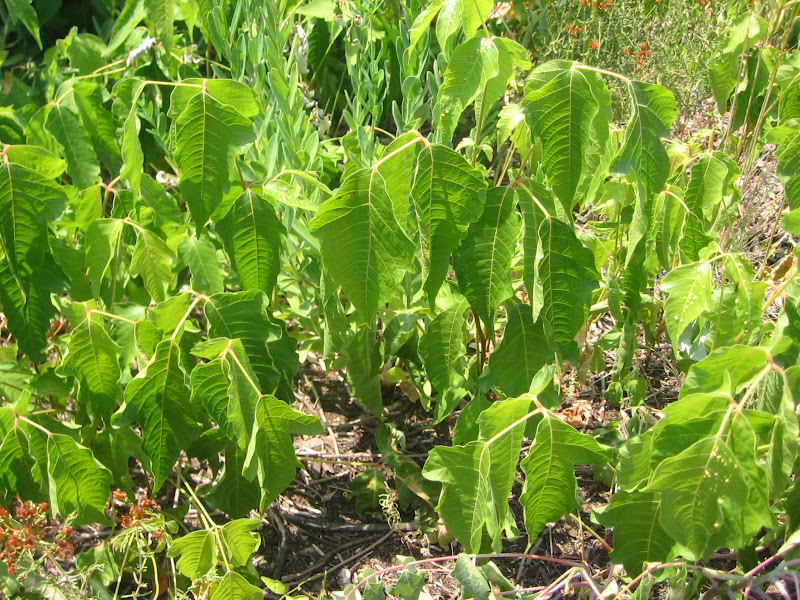
prickly ash

Prickly ash (Zanthoxylum clava-herculis) is in the citrus family (not a real ash), and it's also often called the toothache tree or tingle tongue because of the numbness of the mouth, teeth and tongue induced by chewing on its leaves or bark (thus relieving toothache). It was used for such medicinal purposes by both Native Americans and early settlers. When fully grown, the bark has distinctive corky spines, hence the scientific name (Hercules' club). It's often confused with Aralia spinosa, often called Devil's walkingstick or Angelica tree, which also has nasty spiny stems, but it doe not have the medicinal properties of Z. clava-herculis.

Moving in, we discovered squawroot (Conopholis americana) under some beech and oak trees, this parasite that gets its food from tree roots, doing no photosynthesis itself.

wood nettle
squawroot
And along the trail some of us got intimate with wood nettle (Laportea canadensis), which has a stem covered with stiff white hairs that have the capacity to sting when they are rubbed against. This nettle is native, unline stinging nettle (Urtica dioica), the way to tell them apart is the former has alternate leaves, the latter has opposite leaves. But they hurt all the same if you walk into a patch.

Friday, July 6, 2012

Blue River Sand Barrens


glade mallow
poppy mallow
On our way to Blue River Sand Barrens, Steve pointed out two plants of interest: glade mallow (Napaea dioica), which is the only species that is endemic to Wisconsin, and poppy mallow (Callirhoe triangulata), a species of special concern in Wisconsin, rare globally as well.
sand barren

false heather
This ecosystem is partly or completely of anthropogenic origin, likely early plowing or grazing disturbed the vegetation and allowed the formation of eroded, sandy patches across the area. The attempt at farming ultimately failed, because the only way to successfully farm here is to irrigate like crazy. The landscape is now a quilt of sand barren and dry mesic prairie patches. The dry mesic prairie is dominated by grasses, with many forbs (clovers, legumes) in between. Both ecosystems require fire to maintain them, but not as frequently as a wet or wet mesic prairie would, because it's harder for shrubs to creep in the first place.

When the wind blows out the vegetation (a blowout), and ground cover is less than 50%, we call it a sand barren. Sand barrens are a tough environment, since they are very dry, hot, and the soil continuously moves, so we see only early colonizers like false heather (Hudsonia tomentosa), mosses, lichens and a fungus called earth star (Geaster spp.). Once these took root, other species can move in and succession continues. Since the pebbles are too heavy for the wind, we see a phenomenon called desert pavement, many colorful pebbles on the surface of the sand barren.

desert pavement
earth star
There are many ways (and combinations of these) to adapt to dry circumstances:

1. being succulent, like prickly pears (Opuntia humifusa). The flat, fleshy pads are covered with spines and short bristles, for maximum water retainment. The large, waxy yellow flowers bloom in late June. The common name refers to a pear-like fruit that turns red when mature. The fruits as well as the pads (when peeled) are edible.

prickly pear
2. being active in the spring, then either disappearing for the rest of the year, or going dormant for the summer and returning in the fall, when water is once again, available. This strategy is a characteristic of many annuals that thrive here. Being an annual would be hard in e.g. a prairie, since the vegetation is dense there and annuals would have to "start over" every year.

long-hair hawkweed
3. being hairy, like the long-hair hawkweed or prairie hawkweed (Hieracium longipilum), to prevent excess transpiration. Hawkweeds have a funny way of procreation, which is worth mentioning. A couple fancy scientific terms here: apomixis refers to the replacement of the normal sexual reproduction by asexual reproduction, without fertilization. Apomictically produced offspring are genetically identical to the parents. Pseudogamy refers to any reproductive process that requires pollination but does not involve male inheritance. So, this plant needs to be pollinated, but is not fertilized. Which is also why poor Mendel, who tried to prove his theories on hawkweed after peas worked just fine failed miserably. 
resurrection plant reviving
after 3 hours of addition of water


4. being tough, waxy, with small leaves to survive the blowing wind, like false heather (above)


5. being able to dry out and then, when water is available, "ressurect": resurrention plants are a group of unrelated plants, a life form, who are capable of extreme dehydration, over month or even years. 


6. producing milky juice, like most milkweeds, it cuts down on transpiration


A couple random fun pics I took from the area:


hilarious tree front
hilarious tree back


turtle nest

Sahara

And last but not least, a couple good sites if you want to know more about Wisconsin's ecosystems/animals/plants:

Invasives in Wisconsin - DNR
Wetlands of Wisconsin - DNR
Endangered plants and animals in Wisconsin - DNR

Spring Green Preserve July 5th

According to every official source, evidently, Spring Green Nature Preserve is a wonderful place with a unique flora and fauna. Now since no lizard/bug/bird/spider was exhibitionist enough to come out and show itself to us in 105 degrees, here`s a little show of what we could have seen, had we wondered there when it`s a little less like the deepest pocket of hell`s kitchen.

black locust
On our way in we saw black locust trees (Robinia pseudoacacia), a native, but invasive tree that was translocated first by Native Americans for its rot-resistant roots, then later in the 1900`s because its extensive root system discourages soil erosion. It has high fuel value and bees love it. Which is also why it was brought to Europe, and now we can`t get rid of it despite our best efforts, `cause it`s freakin` indestructible! Black locust survives most mechanical control efforts, if you cut it, it just sprouts right back, or spreads clonally, mowing and burning temporarily control spreading, but mowing seems to promote seed germination, and burning stimulates sprouting.The only way to end it is to bulldoze the whole area, or apply some pretty harsh chemicals that might harm the native species as well.

eastern red cedar
Another native, but invasive species we saw was eastern red cedar (Juniperus virginiana), which takes over dry ecosystems if fire is absent for too long. Fortunately, it`s very sensitive to fire, so a good prescribed burn gets rid of it quickly.

poison ivy
We also ran into a plant that (if nothing else) you should really learn to recognize: meet poison ivy (Toxicodendron radicans).Poison ivy comes in three forms: as a trailing vine on the ground (3.9-9.8 inches tall), as a shrub (upto 3ft 11 inches), and as a climbing vine that grows on trees or some other support. It always has three leaves (`leaves of three, let it be`), but the leaf margins can be slightly different, so just stay away from any three-leafed plant :). Poison ivy produces a group of chemicals collectively called urushiol, which causes blistering on most people.

prairie fame-flower
prairie racerunner
Now for the awesome things living here. Among the reptiles is prairie racerunner (Aspidoscelis sexlineata viridis). Racerunners are extremely fast, these have been clocked going up to 18 miles per hour. They dig burrows to hide from predators, regulate their body temperature and lay eggs. The flowers of the prairie fame-flower (Phemeranthus rugospermus) open only for one day between July and August in the late afternoon. Some believe the plant got its common name because this bloom period is so fleeting, much like fame. They are ephemeral in nature, and of special concern.

tiger beetle
Eight species of tiger beetles are found here. Likely named after the tiger for their similar predatory habits,these beetles are some of the most aggressive invertebrates at the preserve. Adult tiger beetles are fast runners with great short-distance vision, their larvae wait in their burrows with jaws agape for passing prey, ants and other small insects.
wolf spider
Another small prairie predator who thrives on sand blows are wolf spiders, ten species are present in the preserve. Instead of spinning webs, most wolf spiders are ground hunters that will chase and pounce on their prey. Some dig burrows in the ground or under rocks.

Eastern meadowlark
lark sparrow
As for birds, among the ones of special interest here are Eastern meadowlark (Sturnella magna), that are among the first migratory birds to return to southern Wisconsin each year, and lark sparrow (Chondestes grammacus), the largest of our grassland sparrows. Lark sparrows prefer dry, sandy habitats with short, sparse vegetation. They build their nests in a slight depression in the ground, or sometimes on a base of twigs in a shrub or small tree. Largely because their preferred habitat is in decline, they are of special concern in Wisconsin.

pocket gopher
bullsnake
The sand mounds we see at the preserve are created by pocket gophers (Geomys bursarius wisconsinensis), a burrowing mammal that uses its upper incisors to loosen soil and its front feet to dig extensive tunnels. Their name comes from the `fur-lined` external cheek pockets opening on either side of their mouths that they use to carry food. Their tunnels are used by other animals including snakes, like the rare bullsnake (Pituophis catenifer). Bullsnakes are the largest snake species in the Upper Midwest. When threatened, they coil up and make `hissing` sounds. If given no retreat, they attack, but the bite is not serious.

RESPECT to those who made it all the way to the bluff, respect to those who at least attempted the trip, and respect to those who had the foresight to stay in the shade, but nevertheless gave the rest of us dune walkers a big applause upon arrival :).

the glorious ones who made it to the top


Monday, July 2, 2012

Welcome to the pit


Well, hello, folks!

Here's a little platform where I plan to share my field trip notes with you throughout the semester. Whether the format/content/whatnot is up to your standards/needs/requests, we can discuss on Tuesday. For now, just check out the first two entries. I also plan to put it up for debate whether we should limit the visibility of this material only to you guys, or leave it available for the public.

You are more than welcome to comment. If you have a piece of information that I missed, or even worse I have it incorrect, feel free to comment and I'll add it/fix it. BUT, this is not Facebook or a chatroom, so please no unrelated private anythings in the comments. As you will see, I kept the tone pretty easy and casual, but we don't want to necessarily probe the limits of professionalism :)!

Alas, that's all my pep talk for now. Enjoy!

Kata

Fentastic Fen June 28th

wild parsnip
Teri pointed out some nasty exotic invasives on the roadside that are definitely worth remembering. Here is wild parsnip (Pastinaca sativa). This little innocent-looking plant has invaded pretty much all of Wisconsin, and it likes all sorts of open habitats like roadsides, prairies or abandoned fields. Almost all the parts of the plant contain chemicals called furocoumarins, which with the help of ultraviolet light cause bad burns on human skin (phyto-photo dermatitis). If you get the juice on yourself, wash it off right away, and/or stay in the shade (clouds don't help, UV still comes through).
Our next candidate is honeysuckle (Lonicera spp.). Pretty much all the bushy honeysuckle species non-native, our native honeysuckles are vines, so they are easy to distinguish. Honeysuckle is one of the species that invade an area if there is no fire. Once it took over, fire is not even possible anymore, since there is no fuel. So to get rid of it, first we have to cut it down and then burn it.
honeysuckle
Moving on to buckthorns (Rhamnus cathartica - common buckthorn and Rhamnus frangula - glossy buckthorn), these shrubby plants were introduced as ornamentals, and (despite their status as a serious invasive) are still legally sold in the state for hedge rows. They form an impenetrable understory layer, which is especially bad for native, woody habitats such as oak savannas. Fire gets rid of the seedlings, but does not eradicate them, so you have to keep burning an area annually until native vegetation takes over to get rid of buckthorn. It spreads very fast, because the berries contain a laxative, and as birds eat them, well, they poop it everywhere. On the picture the branch with greener, larger leaves in the foreground is common buckthorn, and the darker green leaves in the background belong to glossy buckthorn.
buckthorns

Now that we are depressed enough of invasives, let's take a look at this wonderful fen here. Fens are one of the rarest plant communities in Wisconsin. There is a ridge passing through the landscape which provides the water pressure that feeds the fen. Walking towards the center of the fen the vegetation changes like this: tussocks - sedge meadow - (marsh) carr - fen (mound). The
shrubby cinquefoil

internal flow of groundwater is rich in calcium and magnesium bicarbonates, and sometimes calcium and magnesium sulfates as well. The calcium and magnesium bicarbonates and sulfates precipitate out at the surface (peat), creating a harsh, alkaline soil condition. Only a select group of calcium-tolerant plants, referred to as calciphiles, can tolerate these conditions. 

Chara
watercress


One of these plants, which we also referred to as an excellent community indicator, was shrubby cinquefoil (
Pentaphylloides floribunda). In the water we observed watercress (Nasturtium officinale), a  non-native edible herb, monkey flower (Mimulus ringens), Chara and cut-leaved water parsnip (Berula erecta), which is a poisonous member of the carrot family, and often grows together with watercress, so don't mix them up.
cut-leaved water parsnip

monkey flower (yellow) and watercress (white)
hard-stem bulrush

beaked spikerush

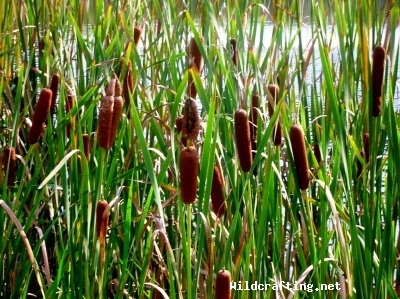
Last, as we were mounting the mound, we observed some pretty cool hard-stem bulrushes (Schoenoplectus acutus), and believed Teri that beaked spikerushes (Eleocharis rostellata)are also somewhere there, but since we didn't see them, here's a pic. Besides these, we found some native broad-leaved cattails (Typha latifolia), which is different from the exotic one, although it's not always easy to tell them apart, as they often hybridize.
broad-leaved cattail

Saturday, June 30, 2012

Scuppernong Prairie - June 28th

Scuppernong Prairie is one of the largest natural areas of Wisconsin, possibly even of North America, with an area stretching somewhere around 30 acres. Natural should not mislead anyone, it`s not intact, but still a prairie in a very good shape, maintained by regular restoration efforts and fire management. Of the two parts we were looking at one was a former agricultural land slowly taken over by prairie vegetation, and the other one is a real, remnant prairie patch.

Queen Anne`s lace
The first plant Steve pointed out was Queen Anne`s lace, alias wild carrot (Daucus carota). It`s an exotic invasive, so we`re not happy about it. The coevolution of leaf shapes in the carrot family and its herbivores was simply hilarious, so here it goes:

...Once upon a time, there were carrots. Herbivorous insects were chewing on there leaves, so they invented secondary compounds that the bugs couldn`t eat. But the toxins were activated by sunlight, so the savvy bugs quickly figures that they could roll up the leaves, and chew from the side that was in the shade. The carrots, of course, couldn`t leave it at that, so to get back at the bugs, they developed strongly divided leaves, and laughed at the bugs who were trying to roll them up. We`re currently waiting for the bugs` response to the challenge...

hybrid
prairie dock
compass plant

Next we got to know prairie dock (Silphium terebinthinaceum), compass plant (Silphium laciniatum), and their - assumed- hybrid. Normally there are isolating mechanisms at work when it comes to fertilization between species - this is, in fact, one of the criteria when defining species. This is why we can`t mate with a lettuce and produce offspring. Although there are examples of different species producing offspring (horse + donkey = mule), but these are more often than not sterile. There are two ways to ensure that there`s no crossing between species, pre-and postzygotic isolating mechanisms, infertile offspring one of the latter. These prairie dock-compass plant hybrids are typically located at the edges of the prairie, which tells us that normally they wouldn`t survive, but the disturbed habitat allows them to be competitive. Looking at these plants we can see that the leaves are thick and hard, with many little hairs, which are all ways to reduce heavy water loss. Another interesting little fact: in case of compass plant, the outer flowers are fertile, the inner ones are not, which is the complete opposite of how a sunflower works.

reed canary grass
mountain mint
Some other species we pointed out on the go were native mountain mint (Pycnanthemum virginianum), prairie willow (Salix humilis humilis), and invasive exotic reed canary grass (Phalaris arundinacea), which was imported for the pleasure of cattle, who apparently hate it, but now it`s freakin` everywhere.
prairie willow
We also learned that the way to tell grasses and sedges apart, is to check their stems, because`sedges have edges` and grasses have round stems. If you want to see a sedge, google it. Parts of the prairie we called a shrub carr, which is funny, because carr means shrubby place, so to ensure you really get it, we say it twice. Like those idiots who say something is the most optimal...  Even a little change in elevation changes vegetation in the prairie, and this variation in topography favors patches of shrubs at certain places.
As this is a wet mesic prairie, it needs to burn every now and then, otherwise woody things take over. It`s soil is very fertile, which is the precise reason why most of these ecosystems were plowed for agriculture. There is a difference between cutting and burning the prairie, in multiple counts: 1. cutting does not create black, burned patches where temperature is higher than nearby places, 2. legumes lose their advantage if there`s no burn and 3. small seeded plants also loose their advantage if we only cut.

goldenrod gall
Moving on we pointed out goldenrods (Solidago genus) (goldenrods are a pretty big family with multiple species native to Wisconsin), and the fact that often you can find so-called galls on its stems. There are two common insects that form galls, the goldenrod gall fly (Diptera) and the goldenrod gall moth (Lepidoptera). The former lays one larva into the stem of the plant, inducing the plant to form a growth around it, which protects the larva from a parasite that would otherwise lay its eggs into the larva. The adult fly emerges in May.


spiderwort
lead plant
rattlesnake master
We also saw spiderwort (Tradescantia ohiensis), the stamens of which turn pink to radiation, lead plant (Amorpha canescens), a legume, which does NOT indicate the presence of lead, despite the common misbelief. The last interesting plant we came across was rattlesnake master (Eryngium yuccifolium), a member of the carrot family (Apiaceae), which looks very much like a monocot with its parallel veins, but is in fact a dicot with an interesting story. It started with normal, carrot-like leaves, but due to the dry climate, it lost most of its blade tissue, with only the mid-rib left. Then the climate became wetter, and it was once again worth having larger leaves, so rattlesnake master flattened and spread its mid-rib - hence the parallel veins. It's leaves are waxy and point to the sun, to  prevent water loss.


Last but not least, some observant students spotted a crayfish chimney!

crayfish chimney